Explore Seasonality and Local Flavors
Eating local sometimes means your favorite snacks aren’t available year round, but that doesn’t mean we shouldn’t celebrate them when they are in season!
The Local Food Exploration Box curriculum is designed for anyone interested in learning about the seasonality of local food, but the activities included are geared for kindergarten through third grade. Click on the images below to access free curriculum!
Each theme has a list of suggested items that can be found through Field to Family’s Online Farmer’s Market, perfect to use in the taste-test recipe provided! If you want to source Local Food Exploration Boxes for a larger institution, like an early childhood education center with multiple classrooms, please email info@fieldtofamily.org.
In November 2024 Field to Family launched its Local Food Exploration Boxes program!
This program was built upon the curriculum developed by Teresa Wiemerslage with the Iowa State University Farm to Early Care and Education extension. VISTA member Phil Tyne expanded the program to highlight the wonderful local producers in our corner of Iowa and explore the cultural and historical importance of food.
Fall
Active Apples
Products Available in August, September, October, November, and December.
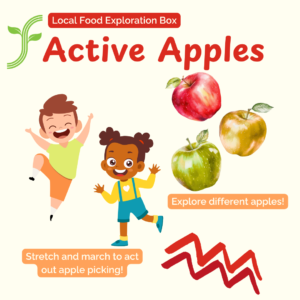
Active Apples will explore the history of apples in Iowa, the United States, and even around the world! In the United States, many people are taught about Johnny Appleseed and think of our cultural appreciation of apples as connected to this semi-fictional character. However, North America’s relationship with apples dates back to before Europeans arrived! It includes a comparative activity and an introduction to the concept of local foods.
Brainy Brassicas
Products Available in late September, October, November, early December
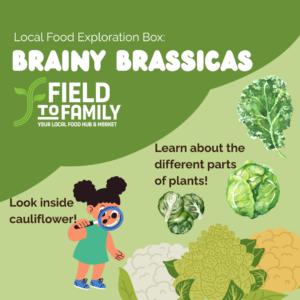
Brainy Brassicas is a good way to teach students about how plants are related, but through choices farmers have made can provide us with a wide variety of vegetables to choose from! Kids explore the different textures of cauliflower and the shapes that cauliflower makes. Depending on availability and preference, you can explore broccoli instead of cauliflower, brussels sprouts or cabbage to learn about the leaves of brassicas, or kale and collard greens to learn about how cooking impacts the flavor of brassicas.
The Three Sisters
Products Available in September, October, November, and December
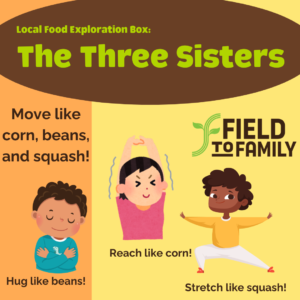
The Three Sisters box centers on the Haudenosaunee legend of the same name. This legend is used by the Haudenosaunee people to explain the agricultural practice of companion planting and reciprocity. For this LFE box, it is important to highlight the importance of taking care of others and yourself.
Winter
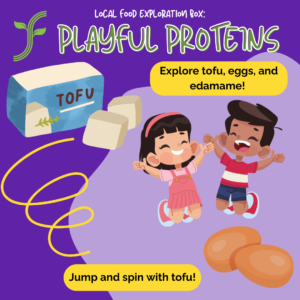
Playful Proteins
Products Available year round.
Playful Proteins focuses on the nutritional importance of protein while also discussing the different environmental impacts of plant vs animal proteins. Since many young eaters are not familiar with tofu and other plant proteins, this box highlights them! Students will learn both how tofu is made today, and how it was made originally in China thousands of years ago!
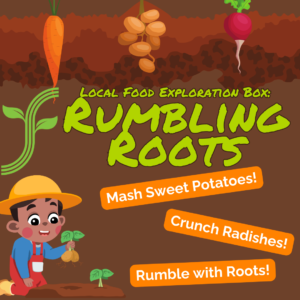
Rumbling Roots
Products Available in October, November, December, and sometimes into January
Rumbling Roots is a great way to teach students about how more than just the “fruit” of a plant is edible! Students will compare different types of root vegetables to learn the difference between tubers and taproots as well. This box also highlights the cultural significance of sweet potatoes for Kwanza.
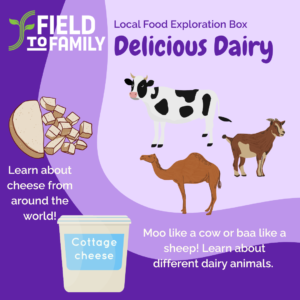
Delicious Dairy
Products Available year round.
In Delicious Dairy students will learn about the history of dairy and how dairy is used around the world, including the different animals that are used for milk. Students will also learn about a some of the dairy producers who work with Field to Family.
Spring
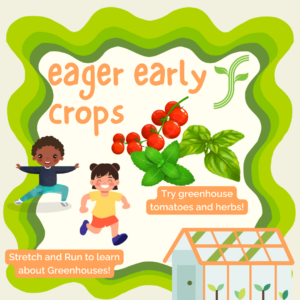
Eager Early Crops
Products Available in very late March, April, and May.
In Eager Early Crops students will learn both about season extension methods like greenhouses and the history of using herbs – a crop that is frequently grown in greenhouses. Students will also learn about hydroponics, a growing method that is used in greenhouses to reduce resources and space required for certain crops. Greenhouses are a useful tool in teaching about how seasons impact what food is available, and how season extension helps us eat local even in winter or early spring!
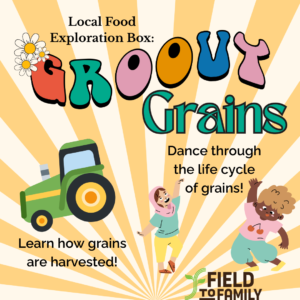
Groovy Grains
Products Available year round.
Groovy Grains are a good way to teach children about what parts of plants give us nutrients. Students will learn the anatomy of grains, in addition to the variety of whole grains that people eat around the world. Students will also act out the growth cycle of different grains according to the type of weather they like.
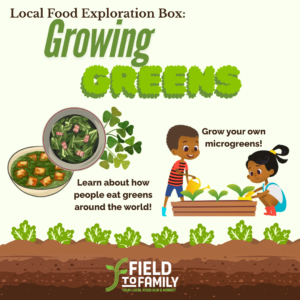
Growing Greens
Products Available in late April, May, and early June
Growing Greensis a useful tool to teach children about how different crops can become particularly important due to nutrients that are seasonally available. Many leafy greens are available earlier in the season compared to other crops, so they are often the first local option for vitamins A, C, and K. For this LFE box, it is important to highlight how different foods are important for different people.